


11 Feb Navigating IoT Solution Development
Creating an IoT (Internet of Things) solution is exciting and challenging. With IoT systems becoming integral to various sectors like transport & logistics, utilities, smart farming, and industrial automation, it is increasingly important to understand the keys to successful IoT Solution development.
Enhancing IoT Security
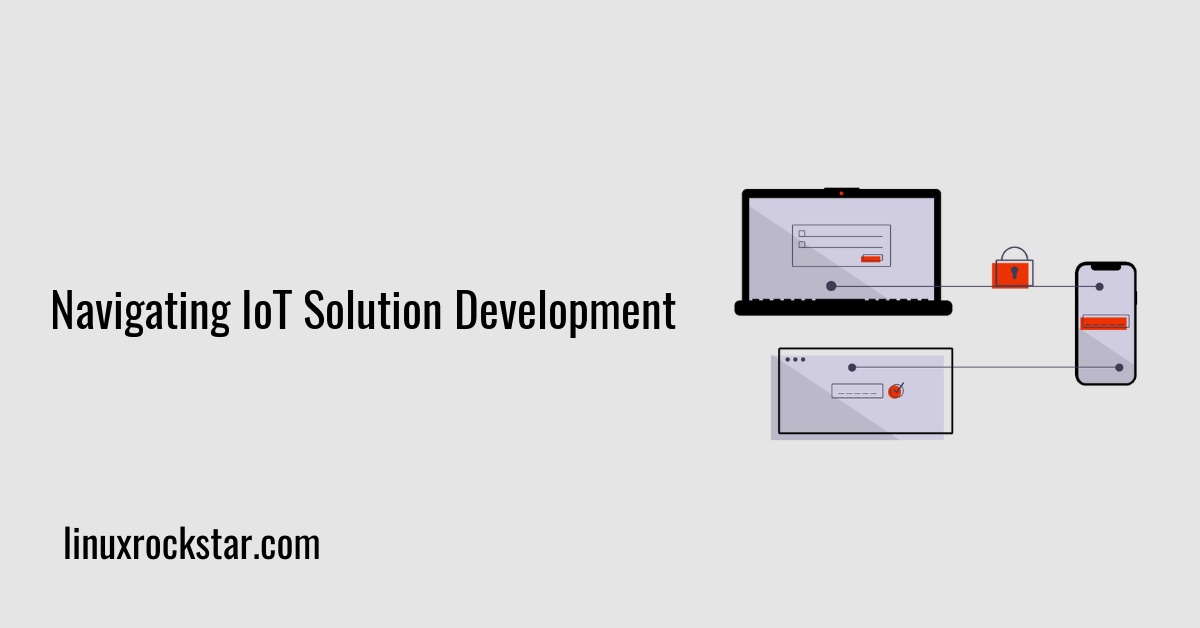
IoT security is built on a tri-layered structure comprising the Device, Communication, and Application layers. Every layer has its own security protocols to meet.
Think of the Device layer as ensuring the security of physical and software properties of IoT components like sensors, actuators, microcontrollers, and communication modules.
Imagine the Communication layer as a defense mechanism that guards data transmission within the IoT system. Network infrastructure is secured using top-notch encryption technologies to ensure secure data transmission. Both cellular and non-cellular LPWAN networks allow for flexible and adaptable device deployment options.
The Application layer, our last line of defense aids in protecting our central databases and applications from harmful operations. Risks such as data infringement due to poor design or potential security breaches are managed by practical measures such as unique identifiers for each device, and powerful security-monitoring systems, ensuring data integrity.
Achieving Success with IoT
In the vast IoT landscape—expected to be housing an overwhelming 41.6 billion devices by 2025, according to the World Economic Forum— managing them on a large scale is a challenging task. Success lies not in few simple steps, but rather in a complex multi-tier structure. This structure may include:
Real-world deployments make the scale challenge tangible. A smart city parking network, for instance, may involve thousands of sensors, payment terminals, and digital signage units — each requiring coordinated management across edge, fog, and cloud tiers. These IoT-enabled urban parking solutions demonstrate precisely why a multi-tier architecture is not a theoretical convenience but an operational necessity: devices must report occupancy in real time, communicate with back-end analytics platforms, and remain interoperable across vendors — all simultaneously and at scale.
Interoperability is crucial. Embrace the freedom of choice, from neutral devices to universal platforms, and technologies. A reliable connectivity standard greatly impacts device performance and power consumption.
Adapting and versatile IoT platforms guard against future uncertainties, preventing costly adjustments later. An adaptive platform remains relevant amidst rapidly changing technological trends.
Effective device management and sophisticated processing of aggregate data are key to large-scale IoT deployment. The right software choice, provided by reputable vendors like Google, Arm, Apple, Microsoft, AWS, SAP, Oracle, and others, can determine the success of your development lifecycle. Customized software adds flexibility to your IoT solution.
Before diving into the individual hardware components that power your IoT setup, it’s worth pausing on how all that device-generated data actually comes together at scale. When you’re pulling streams from dozens — or thousands — of sensors, actuators, and endpoints managed across multiple vendor platforms, raw aggregation alone won’t cut it. This is where data virtualization for unified IoT ecosystems becomes a critical layer in your architecture, allowing you to query and consolidate disparate data sources without physically moving or duplicating them. Getting this integration strategy right at the macro level makes every hardware decision you face afterward far more deliberate and informed.
Understanding IoT hardware components is equally important. Choose suitable components like sensors, actuators, and communication modules, it is not just about circuit design but also about adaptability, cost-effectiveness, improved performance, long-term benefits, seamless integration, and reliability. The rewards of a comprehensive component choice, thorough testing, and quality assurance contribute greatly to IoT solution development.
Crafting the Ideal IoT Blend
Tailoring your solution according to device location, power consumption, and mobility requires choosing the right connectivity mode. Cellular networks, non-cellular LPWAN, Wi-Fi, Ethernet, and satellite connectivity form crucial ingredients in the connectivity mix. Carefully chosen standardized protocols and solutions form the base for a cost-effective and secure plan.
Selecting the ideal IoT software from technology leaders like Google, Arm, Apple, Microsoft, AWS, SAP, and Oracle is crucial. Like a chef picking the ingredients for a dish, each selection must complement the other while adding its own value. Customization helps to bring every IoT project to fruition.
Setting the IoT Development Path
Technology leaders must consider various factors – choice of IoT operating system, the scalability of the app, communication protocols, the speed, and performance of the app, and vital security measures when embarking on IoT development. For sectors like smart city development and connected cars, only flawless performance can pave the path to success.
IoT Solution Development is a thrilling journey of discovery, insights, challenges, and victories. It requires thorough planning – from device layer security to deployment, managing physical properties to handling software properties, streamlining data processing to user-friendly maintenance, while also considering economic feasibility. The Internet of Things is changing the world, one device at a time. In its intricate ecosystem, the success of IoT applications can be achieved by choosing the right components, integrating them properly, and ensuring their durability.

Clifford Robinson writes for Linux Rock Star, a blog dedicated to Linux and UNIX security. He specializes in creating high-quality content focused on system auditing, hardening, and compliance, aiming to make these topics accessible and actionable for system administrators, auditors, and developers. Clifford is passionate about providing valuable insights into Linux security, ensuring that the content is both informative and freely available to help readers secure their systems effectively.
Sorry, the comment form is closed at this time.